
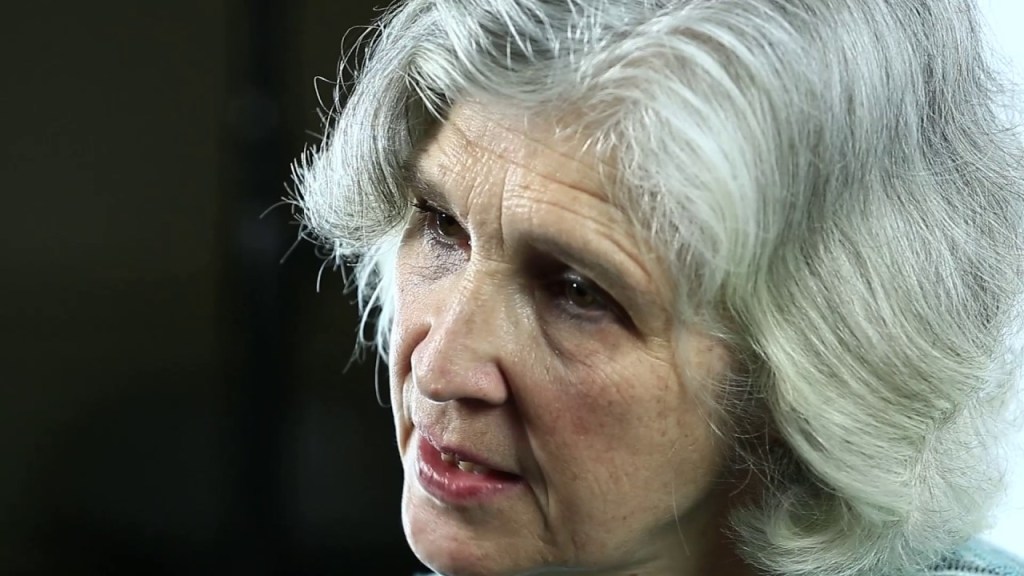
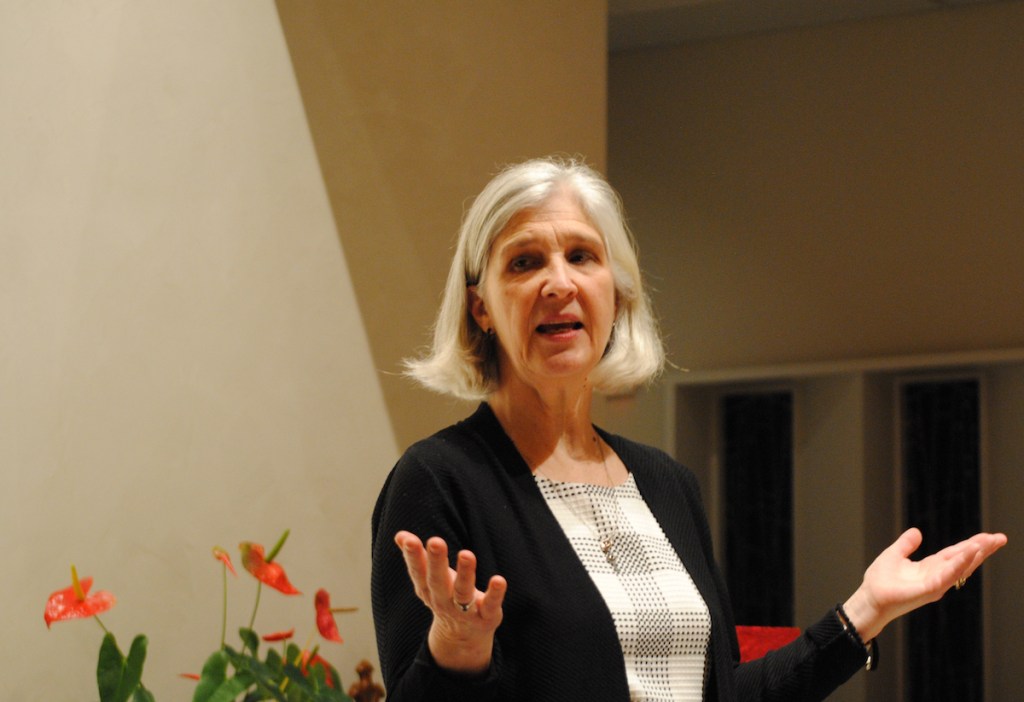
Welcome to the website of Edith M. Humphrey, William F. Orr Professor Emerita of New Testament (Pittsburgh Theological Seminary), Orthodox Christian, and grandmother of 26 children.
Originally from Canada, she and her husband Chris have lived in Pittsburgh since 2002. Though retired, she continues to write and to teach in various milieux, and enjoys playing piano duos with a good friend. Her academic interests include visionary biblical literature, C. S. Lewis, theological anthropology, and patristic reception of the Bible, represented in numerous articles and 10 books, several of which have been translated into Russian. Currently she has celebrated the release of Mediation and the Immediate God: Scriptures, the Church, and Knowing God (SVS Press, June, 2023), and is rejoicing in the publication of her second children’s novel, Down the Valley (Cascade Imprint, January 2024).
A Personal Blog
What’s going on in my life that I’m happy to share.


New Release! A novel of faith, family, and fantasy for ages 9-15.
$19.00 Available now at Amazon and Wipf and Stock Press (Cascade Books)
Mediation and the Immediate God: Scriptures, the Church, and Knowing God
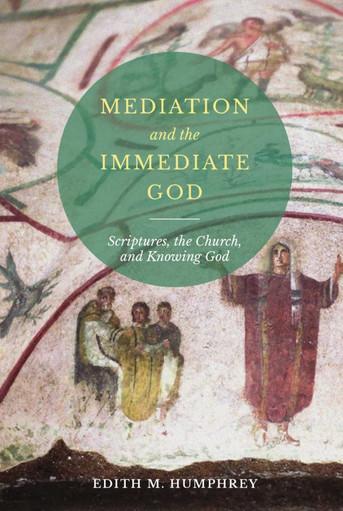
$21.00 – Available now at SVS Press
Mediation and the Immediate God pursues a long-debated question: How can we say both that God has a direct relationship with each Christian, and that He uses others in order to bring us to health and glory? I explore the ubiquity of mediation in the Christian life, and in life in general, as well as the paradox of mediation alongside the Christian confidence that each of us can be directly “taught by God” because of the gift of the Holy Spirit. Mediation is understood best as an ecclesial matter (showing the nature of the Church) and not as part of a soteriological debate.
Beyond the White Fence
“Simple and deep – like all great children’s books – this book is also rich in history and faith. I can’t wait to place it in the hands of my grandchildren.”
–Scott W. Hahn, Founder & President of the St. Paul Center; Author of The Lamb’s Supper; Scanlan Professor of Biblical Theology, Franciscan University of Steubenville

Explore Edith’s Writings
Books for both popular and academic audiences.
A Lamp for Today
Understanding the Old Testament with Jesus and the Apostles.

Speaking Engagements and Interviews
Recordings and papers from past speaking engagements and how you can invite Edith to speak at your event.



 Edith M. Humphrey
Dr. Humphrey, I have greatly appreciated your book Grand Entrance. I teach adjunct at a small school in northern Minnesota and have been looking for a book that explains this world that is so far removed from our own. I have a question for you. One thing the book does not address but I see the potential for in your definition of worship on page 4, how does the spiritual life intersect with worship? The individual life participates in the worshiping community but how do spiritual disciplines fit into worship? I hope my question makes sense. Would love your insight if you are willing and able to entertain my question. God bless!
LikeLike
Dear Corban:
What a wonderful name! (The last name, too: I was born McEwan). It is very good to make your acquaintance. My purpose in the book was mostly to address corporate worship, you are correct. But indeed I have something to say also about personal prayer life on pages 11-17, where I argue that though our prayers with the LORD are intimate, they are never fully PRIVATE, for we belong to the Body of Christ. As an Orthodox Christian, the spiritual disciplines include for me hours of prayer, learning to be still before the LORD with the help of “the Jesus Prayer” (“Lord Jesus Christ, Son of God, have mercy on me a sinner”), repentance and confession, thanksgiving, intercession for others, regular participation in the Lord’s Supper, and fasting. Some of these have a distinctly personal aspect, but they are connected with the entire family of Christ, in their own way. If you are interested in what I have written about the Christian spiritual life, you might want to read _Ecstasy and Intimacy: When the Holy Spirit Meets the Human Spirit_, and also (but a more narrow topic!) my most recent _Mediation and the Immediate God: Scriptures, the Church, and Knowing God._ The first, Ecstasy and Intimacy, is directly on what you are asking, and the second lifts up our mutual life with each other. Please do keep in touch! And thank you for your encouragement!
Your sister in Christ, Edith
LikeLike
Hello Edith, we have had a few email exchanges some years ago. I would like to write to you about a few things – not business, just friendly and about Orthodoxy, your Ancient Faith blog and your writings. Do I use the PTS email address for that ? Kind regards, Lesley
LikeLike
LEsley, I do not remember I I responded to you on this. If not, my apologies. If so, then I am still at ehumphrey@pts.edu
LikeLike
I read an essay you wrote in Healing Humanity. As a professed Orthodox Christian, why are you a disciple of C.S. Lewis? You should convert to the Anglican Church. Don’t your 9 boundaries put a limit on mystery (mystery can’t be quantified by any number of boundaries)? Mystery is ineffable, is it not? You need to read the works of Pseudo-Dionysius the Areopagite to understand the splendid mystery of the Trinity, allowing us to stray beyond what we know, into an ultimate unknowing. Moreover, the only thing you’re “safeguarding” us from is the direct mysteries revealed to us in the teaching tradition of the Orthodox Church itself, through the Sacraments, and Holy Scripture. You are over analyzing the simplicity of revealed mystery, just like all the post modern pundits do at present. I’ll exit by quoting Archpriest Peter Heers, from the essay he wrote right after yours in the same book: “Therefore, anyone, no matter the rank, who sets aside the sacred deposit if faith, far from improving on or updating the Lord’s teaching, simply makes himself irrelevant”. You are not setting aside the deposit of faith per say, but you’re laying down the path leading away from the deposit of faith, by trying to prove too much that is extraneous to the deposit of faith! So no, your not rejecting Christ’s Church, teachings, or commandments, but you analogize, try to improve upon, and are 9 steps removed from accepting “every word of the Word” (Heers), of Christ Jesus, revealed through His mysterious incarnation as the God-Man . . .
LikeLike
Sammy, I am sorry that I did not see this until recently. I think you do not mean that I should join the Anglicans (whom I left for the apostolic Orthodox church, though I retain many friends there). After all, it seems that you believe the Orthodox Church to be the true Church, so why would you ever counsel anyone to leave her? I certainly would not.
Perhaps you are worried that I make use of Lewis. That is too bad, for the Holy Spirit, who is “everywhere present,” can speak through those who are not (yet) Orthodox. And, of course, we would not presume to say what Lewis now understands about the Church, since he is no longer with us. I am not his disciple, but I learned much about Christ, the Bible, and theology from him, as have others in Orthodoxy. Fr. Thomas Hopko considers his essay “The Abolition of Man” is the single most important writing to explain the flawed mindset of today, and claim the foundational truth of Christ.
Of course, I would never use Lewis’s reasoning on ecclesiology, since he was a Protestant, and misunderstood, in some ways, the nature of the Church, subscribing to a kind of “branch theory.” But he had plenty of important things to say, and he is worth reading on other things.
I would like to know precisely what you see to be problematic in the 9 boundaries that I suggest, rather than just hearing you reject the idea of negative boundaries. Yes, our faith is mysterious! Indeed, I introduce the 9 boundaries by saying that they are intended to help us see “where our reason cannot take us.” One of the ways that the fathers spoke about mystery is by using the negative way, which I do here. We struggle to use words to speak of the Trinity, and indeed to speak of the mystery of humanity. And so sometimes negative sentences help! We see this in the Creed, where we speak of the Son being “begotten, NOT made,” and in other patristic works where God is described as uncircumscribed, without a body, uncreated, and so on. That is what I am trying to do with these 9 boundaries, to show, from what we have learned in Scripture and Holy Tradition, what we CANNOT say and remain Orthodox–that is, to prevent heresy in our talk about male and female, and in how we speak about the triune God.
If you can show where any one of my 9 boundaries departs from Scripture and Holy Tradition, then I will gladly hear you! But you simply say that these 9 statements remove me from accepting the Word, and that they inhibit mystery. Actually, they are built UPON words from Scripture and the fathers, or at least that was my aim. And indeed, several of the boundaries are “opposite” to each other showing the mystery: “We cannot say that the relations of Father, Son, and Spirit are symmetrical, nor can we say that they are not mutual and equal.” For example, the Father begets the Son, but not vice versa (they are not symmetrical), and yet one must NEVER deny the divinity of either, nor their mutual existence. This is simply creedal and patristic.
So, I would want to know how the “path” that I have laid down leads away from the deposit of faith. My concern was to help to describe it and show where we might stray from it. If the 9 boundaries are not helpful to you, that’s fine–they are just suggestions. But just to assert that they are false, without showing how, is not helpful.
Your sister in Christ, and decidedly Orthodox,
Edith
LikeLike
Many thanks for your discerning position as excerpted on “The LGBT agenda in western Orthodoxy” YT vlog. ”Wise as serpents and innocent as doves” is called for in that debate setting and needs to be honed by Orthodox participants so as not to concede the ground before the discussion has even begun. Your voice, to my ear, struck the right note on how to avoid entering the debate unprepared.
LikeLike
Thank you, friend. This is not my first rodeo, as I was involved in Anglican “dialogue” from about 1984 until 2008. I am sorry that this has come to Orthodox circles, too, and (quite honestly) there are no new arguments, just more arguments that try to involve the fathers as well as the Scriptures. Sadly, some of our scholars are more inventive than faithful, but the bishops appear to be aware, and holding for both love and righteousness. We must pray for them!
LikeLike
Hi Edith, I recently found out about you through Gospel Simplicity. In the video where you talk to Austin about the biblical theology of true worship you mention how we only have fragments of the liturgy of Saints Addai and Mari. Can you explain why that is? Is this solely due to Islamic oppression or are there other reasons as well? It would seem to compromise the validity of the liturgical rite. Also are there any other Eastern Christian liturgies that have suffered a similar fate?
Thank you
-Dylan
LikeLike
Hello, Dylan. Thank you for your question regarding the Liturgy of Sts. Addai and Mari. I wasn’t able to find where in my conversation with Austin I said that we “have only fragments”–it may be there, but I missed it. The liturgy is still used by the Eastern Syriac Church, and was used historically in the Persian empire. It is unlikely that the liturgy that is still used is identical to the original, and many scholars thing that there have been additions to it: certainly among those who are now in communion with Rome, there have been recent “tune-ups” to bring it in line with Roman Catholic teaching (e.g. the words of institution have been made more clear). I think that in many Coptic/Syriac settings the Liturgy of St. Thomas took its place, but I haven’t done research to confirm that–so it probably does not have to do with Islamic oppression, because a Liturgy attributed to Sts. Addai and Mari has been used in some places for centuries, even through Islamic rule. What compromises the rite in the view of many is the way in which the Words of Institution are scattered, rather than gathered together in one solemn act, and also the lack of an actual epiclesis in the Anaphora.
I am sure that Liturgies have come and gone, but it is interesting to me that in the East, liturgies associated with St. James, St. Basil, and St. John Chrysostom all continue to be used, with the latter two having a more prominent place. My reason for talking about the Anaphora of Addai and Mari was to show the mystery and the association with heavenly worship, into which the congregation enters–this is a very early example of what we see in the liturgies that continue to be used in the Eastern context.
In the West, there were numerous liturgies (see my book Grand Entrance), and normalization to one rite came quite late, for various reasons.
All the best,
Edith
LikeLike
Thank you for the thoughtful response. Just as a follow up question, if parts of or all of the liturgies that the Orthodox Churches use were to hypothetically be lost, wouldn’t that be problematic in any way since the Orthodox follow both scripture and tradition? Or are liturgies replaceable and interchangeable?
LikeLike
Hi, Dylan! The question seems strange to me. There is no way that the liturgies in common use would be “lost” because they are known by heart by many Orthodox (not just the priests), and are part of a LIVING tradition. Certainly more than one liturgy has been used throughout the centuries, both in the East and in the West, and several are frequently used concurrently, though for different occasions. IN the Eastern Church, we use the liturgy attributed to St. John Chrysostom most frequently, that attributed to St. Basil (which has much overlap, but longer priestly prayers) especially during Lent, the liturgy of St. James on special occasions, and the pre-sanctified Liturgy of Gregory the Theologian during weekdays of Lent. They are all known and beloved. IN the Western Church, the variety of liturgies mostly gave way to the Latin rite, but there are other rites that are used in certain parts of the Roman Catholic Church. In the east we would not say that liturgies are ‘interchangeable,” but that they come to us with a history, and form different honored places in our worship. If you are more interested in the development of liturgy both east and west, there are plenty of books. I recommend especially “The Shape of Liturgy'” by Dom Gregory Dix. I have also written on this in two chapters of my book “The Grand Entrance.”
LikeLike
Dear dr. Humphrey,
I am interested in Eastern Orthodoxy, and specifically in the canon of scriptures. I read some articles from you and also saw you on the Transfigured life channel. I really appreciate your work.
i would like to ask you a question. What is the status of books like Sirach, Tobit etc. in regards to inspiration. Are these writings written under the inspiration of the Holy Spirit, on par with the rest of the books of the Bible?
I read that for example the Russian Orthodox Church defines these as not-inspired. If there are different views on this, may I ask you what is specifically your take?
Thank you for your answer in advance!
God bless,
David Szaraz
LikeLike
I am sorry that I did not completely quote 2 Tim 3:16-17, which says, of course, that all Scripture is God-breathed (“inspired”). Since the early Church and NT writers mainly used the Septuagint, which includes the books you are asking about, the answer is yes, they are inspired by the Holy Spirit. The website from the OCA says that they are “fully Scripture,” as does the Synod of Dositheus. I accept the majority view of the Church, that these are Sacred Scripture. Those who make a stronger distinction between the “Canonical” and “Readable, but Appointed” books are following the statement of St. Athanasius in his Festal letter, which is a reasonable thing to do. However, one saint does not speak for the whole Church, and he adds the Didache and Hermas to the list of the Readables, though they have never appeared in any Orthodox collection of the OT. By the way, he includes Baruch in the canonical list.
So, yes, we consider these as inspired, while a few Orthodox make a stronger distinction than others between the Readable Books and the others, clarifying that the Readables are important for instruction in piety, but not for the derivation of doctrine on their own. While Athanasius calls them “Readables” (and this name has stuck), St. John of Damascus, several centuries later, calls them Arētos–“all-excellent, all-expressive-of-divine power.” I want in my writing to acknowledge a difference among Orthodox, while also making it clear that in general these books are honored as inspired, just like the others in the OT.
I wasn’t trying to be coy in telling you that perhaps another question is warranted. When you seem to clarify “inspired” with language like “on a par,” I think perhaps that you have a bit of a wooden view of inspiration. Not every book or every section of the Biblical collection has the same force or same purpose, so far as the universal Church is concerned. I think you would likely say that the command “And if your offering is a grain offering baked on a griddle, it shall be of fine flour unleavened, mixed with oil. ” is not “on a par” in terms of applicability with “Thou shalt love the LORD thy God.” This is not just a matter of time, but also of the particular purpose of a book or a portion of a book. Bel and the Dragon is not written to demonstrate that there were dragons living during the time of Daniel, but to combat idolatry and to instill courage in God’s people when they are being suppressed.
So, I think it a mistake to use the word “inspiration” as if it could be measured, and think that it is important to question what exactly we mean by the statement that a book is inspired. If we mean by that word that we think we will always get “facts” from the passage, then we will be mistaken, and miss the richness of ways in which God speaks to his people. He speaks as the ancient prophets and apostles also speak, and he does so in various modes. “All scripture is given by inspiration of God, and is profitable for doctrine, for reproof, for correction, for instruction in righteousness.” Some books are more profitable for doctrine and others for instruction in righteousness. By and large, the Readable, or All-Excellent books are profitable for instruction in piety, as Athanasius and others have said. But we find doctrine there too, as with the wise words of the mother of the 7 martyrs, who speaks of God creating from nothing (the first clear articulation of this doctrine) and looks forward to the resurrection of her martyred sons.
Inspired, in a special way that distinguishes them from other wise books, in a way similar to the NT and rest of the OT canon? Yes! “On a par”? Depends on what you mean by that, and what you think inspiration entails. A final word: Orthodox did not have to contend with Protestantism that rejected these books, and so has not spoken unequivocally about the OT canon, except of course for the seventeenth century council that I quote above which is aware of the controversy–but the council in question is not ecumenical, so it isn’t binding to all Orthodox. Generally speaking, we do not dogmatize as often as the Catholics, but follow a family understanding of the truth, as guided by the fathers. In this case, that means never rejecting the Readables, but going to them as books inspired by God for our benefit, even if there are variations on the exact limit of the OT canon, or in understanding the WAY in which these books are instructive. Personally, I follow what I consider to be the majority view: these books are fully inspired; but the definition of “inspiration” is key here.
Hope this is helpful!
Go bless you in your quest regarding Orthodoxy!
Edith
LikeLike
Dear to Christ, Dr. Edith,
Christ is in our midst!
I pray this finds you well in the Lord.
You may not remember me, but I was one of your doctoral students at AHOS some years ago. I recently picked up your book Further Up and Further In, hoping you had written something on That Hideous Strength. Thank you—truly, thank you. I’m still making my way through the “Depravity and Possession” chapter, but I wanted to reach out and express my gratitude.
You have a gift for taking the complex spiritual dynamics Lewis describes and place them squarely within the Orthodox theological tradition. You aren’t doing literary analysis so much as drawing us into prayer.
I’ve been rereading That Hideous Strength lately and find myself recommending it to nearly everyone I know. It feels strikingly relevant to the times we’re living in.
Love in Christ, Fr. James Coles
St. Ignatius of Antioch Orthodox Church
Mesa, Arizona
LikeLike
Dear Fr. James: Indeed I do remember! I am glad that my book on Lewis has been helpful. The chapter on That Hideous Strength was the hardest one for me, probably for the same way that Lewis found Screwtape hard. Did you know that Lewis considered THS to be the novelesque equivalent to the triad of essays called The Abolition of Man, which Fr. Thomas Hopko considered to be the most important writing for understanding our time?
Thank you for your encouragement!
Asking your blessing,
Edith
LikeLike